
History of the Colored Congresses of PTA

Texas Colored Congress

The story of the Texas Colored Congress of Parents and Teachers is a familiar one. In 1917, W.S. Benton, a Fort Worth teacher and mother, started a “mothers’ club” in her living room. Around 1910, Texas towns began to roll out strict segregation rules known as Jim Crow laws. Segregation not only impacted students and schools, but it seeped into all areas of public life – restricting the freedoms of people of color.

Public school parents of all races saw this racially charged milieu play out over the majority of the 1900s. W.S. Benton was one such parent (and teacher). Despite the odds, she was committed to making the most out of family engagement and its role in childhood development.

Within a year, Benton gained favor in Fort Worth and, with the blessing of principals and the superintendent, formed a mothers’ club in each public school. As this “council” formed, she rose to become its first president. By 1920, Benton went on to organize associations in five other cities including Dallas and Port Arthur. The efforts of these PTAs helped build schools, form curriculum, buy books, and spread goodwill throughout the state.

On November 24, 1920, each club was asked to send delegates to a meeting of the minds. This meeting marked the beginning of the Texas Congress of Colored Parents and Teachers.

Over the next ten years, the congress would double then triple in size with Marshall, Waco, and Houston joining its ranks.

National Colored Congress

Selena Sloan Butler was a natural leader. When her son Henry enrolled at Yonge Street Elementary School in Thomasville, Georgia, Butler formed the school’s first PTA. In 1919, Butler wrote to the National Congress of Parents and Teachers (NPTA) to inquire about the work of PTA at the national level. Beginning at this time and over the course of 20 or so years, many state congresses formed (with Georgia at the helm and led by Butler). On February 11, 1928, the National Congress of Colored Parents and Teachers (NCCPT) officially established.

Fast forward through wars, the Great Depression, and a couple decades of racial tension, and in 1954, Brown vs Board of Education brought an end to segregation in public schools … at least in theory. An especially bizarre scheme to slow the progress of desegregation is recounted in a fact-finding report from the National Education Association on Desegregation in Mississippi, as follows:

“In [one school] belles to signal class changes ring at different times for black and white students so that even walking through the halls is segregated. The white teachers and pupils in one “desegregated” school are housed in two rooms at one end of the building. The two white teachers, with a total of six white pupils in their classrooms, have no contact with the black principal.” They continue, “At a supposedly desegregated high school, the 40 cheerleaders are white. When one black co-ed sought to become a cheerleader, she was told to come back after she had raised $80.”

Amid substantial tensions in 1970, National PTA and NCCPT leaders called for a merger of the two organizations. There had been talks for several years and both congresses believed their common goals made this the right thing to do. As the two National PTAs became one, each state was also mandated to merge with its counterpart.

Then National PTA President Pearl Price wrote, “I would be less than candid if I said all parents and teachers, black and white, welcome this unification … Our challenge now is to move above and beyond our separate, divisive experiences and build a shared experience, the experience of working together not as black persons and white persons but as human beings intent on building a society that cares deeply for all its children, whoever and wherever they are.”

This would not be the end of the struggle to achieve true racial, cultural, and administrative balance in Texas and National PTA. Over the years, substantial and intentional efforts were made to drive equality and to oust racial tensions.

Sources

Archives, Texas Congress of Colored Parents and Teachers History, 1961-1968. AR.J.014.

Education, United States Congress House Committee on Education and Labor General Subcommittee on. Emergency School Aid Act of 1970: Hearings, Ninety-First Congress, Second Session on H.R. 17846 and Related Bills. U.S. Government Printing Office, 1970.

Price, Pearl B. “One for All.” The PTA Magazine, September 1970.

H20 Is the Way to Go

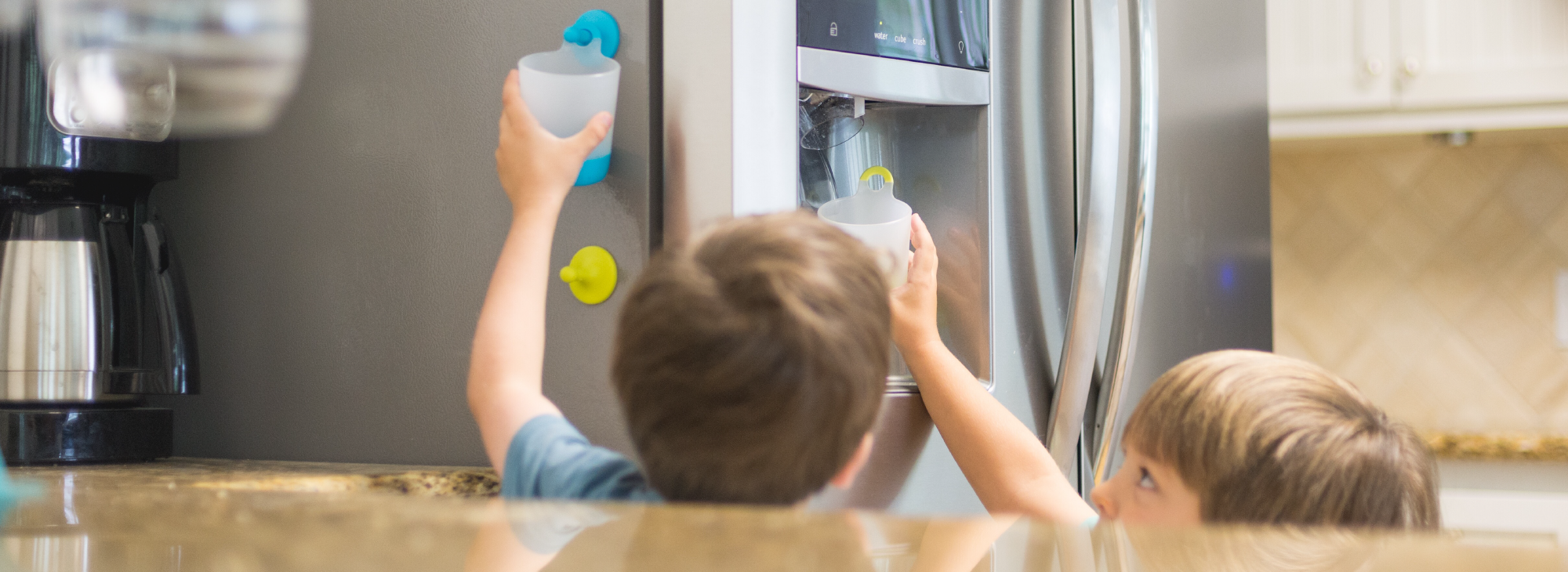
It’s PTA Healthy Lifestyles Month and one area of focus is healthy hydration! So, let’s talk about water. Yep, just super simple, thirst-quenching, naturally refreshing wonderful water.

Walk up and down the aisles at any supermarket and you will find plenty of choices for so-called “healthy water.” But what exactly is this flashy packaging promising … Electrolytes? Added sugar? Artificial sweetener? Water doesn’t have to be complicated and we know we all need to drink it, probably much more than we already are! Skip the unnecessary, sometimes overpriced products on the shelf and try a few of these steps instead!

Take Water from Meh to YEAH!

1. Infuse water with fruits and herbs to add flavor without adding calories or artificial ingredients.
2. See if you like your water ice cold or room temperature. You never know, you might have a preference!
3. Scrap bottled water and invest in a filtered water pitcher to make better-tasting water readily available. Mother Earth and your wallet will thank you!
4. Try caffeine-free herbal teas or naturally flavored sparkling water.
5. Mix it up. Even natural juices can be watered down to cut the sweetness and add more water to your diet. (This is a trick I’ve used on my kids for years!)
6. Eat water-rich foods. Watermelon has its name for a reason! There are many foods to choose from.

Hydrate Around the Clock

1. Try to drink water every hour or before every meal – this will help you get into healthy habits and fill your belly up before a meal!
2. Remember the general rule of thumb is 8×8 (eight 8-ounce glasses of water a day).
3. Try a free app to track your water intake throughout the day.
4. Break in a portable water bottle made from BPA-free plastic or stainless steel (spruce it up with stickers or a cool reusable straw). Make sure you take that cup everywhere – your car, meetings, errands. The more you have it around, the more likely you will drink from it!

Lasting Thoughts

What water really does for our bodies.
We’ve heard that 70% of the body is made of up water, but do we know what that water is doing inside our bodies? It’s helping all of our organs, bones, muscles, and joints do their job! Sometimes when we feel sluggish in the afternoon, we may not actually need that extra cup of coffee – our brain may be in a fog because it needs more water. Lack of water has been scientifically connected to impaired mood and concentration, increased anxiety, and increased headaches. On the flip side, drinking more water has also been connected to losing weight, maximizing physical activity, and even aiding constipation. A lot of things we think we might need a pill for can sometimes be fixed by simply drinking more water.

Mega-Volunteering

Why do people volunteer?

I have to be honest. I am not a volunteer. At least, I’m not a volunteer yet. I am a young, single woman with no children and no ties to public schools besides that I live and work near one. I have been employed by public school districts and now by Texas PTA but in full disclosure, they pay me to be here. In a conversation with Kelley Thomas (President of Plano ISD Council of PTAs), she told me that she volunteers not just for PTA but a number of other organizations and for nearly 60 hours per week. Forty of those hours are with PTA. I couldn’t believe it. Why work for free? Why give away your most valuable resource (time) every day FOR FREE?

The membership of Texas PTA shocks me. In my role, I often interact with our Board of Directors and other leaders. These people are what I call mega-volunteers. They take service to some kind of extreme — advocating, traveling, counseling, and meeting almost every day just to help PTA operate.

“It is an American custom to spend most of our adult lives finding ways to turn our talents into money.”

Human Capital

When you go to a job interview, the hiring party often asks two types of questions: What do you know how to do? and What kind of person are you?

This same concept could be applied to volunteerism. But in this case, it is you who hires yourself. In a 2010 article on organizational behavior, volunteering is characterized in three ways:

1.“The volunteer must seek out the opportunity to help”
2.“The volunteer arrives at a decision to help after deliberation, and
3.“The decisions about beginning to help and continuing to help are influenced by whether or not the activity fits with the volunteers’ own needs and goals” (Lavelle)

As a young parent, Kelley Thomas knew she would join a PTA but didn’t yet have any plans to be a leader. When dropping her daughter off at kindergarten, another parent considering the role of “Room Mom” said, “I’ll do it if you do it.” The rest was history.

So many PTA parents have a similar story. You think, ‘I like my kids and I like the school, so why not?’

At PTA meetings, you might have heard that they needed a Treasurer, Parliamentarian, and a Social Chair. So you asked yourself, ‘Am I the kind of person that would offer something to this PTA? Do I know how to do anything that would allow me to contribute? Do I care enough to get involved?’

If you are like the PTA volunteers I have met, you jump in headfirst employing all of your talents to help your kids, the school, teachers, and other parents.

It is an American custom to spend most of our adult lives finding ways to turn our talents into money. In fact, most of us have to. This is called Human Capital (what do I know how to do?). We pour money into education and training and then go through the heartbreaking procedure of finding work. When we get the work, then we spend our time and talents climbing the ranks (hopefully toward more money).

When you volunteer, the energy is still spent but the money goes somewhere else. So what motivates people to donate their Human Capital to an organization?

Well, it depends. Age, employment, family structure, demographics, and health are all predictors of where and how people will volunteer (Carr). For example, middle-aged people are more likely to engage heavily in community-oriented and youth-oriented volunteering. What’s more, people with children, partnered or not, are about 1.75 times more likely to engage in youth-oriented volunteering (Carr).

Social Capital

It also depends on several prosocial aspects. For example, some people join a volunteer-based organization for the socialization, the sense of community, or the service-learning opportunity (Stukas). Here’s where Social Capital comes in (what kind of person are you?).

Social Capital encompasses a much broader spectrum of skills. We all have it on some level. This could mean being purposefully influential, supportive, having numerous connections, or a great reputation. These can all be applied to pursuing a paying job and that’s why so many employers ask both of those questions ㄧ What do you know how to do? and What kind of person are you?

For people with high Social Capital, volunteering, fundraising, and leading come natural. They make fast friends, can usually convince anyone into anything, and the good ones use their personalities to help kids, raise funds, and give back.

For the most part, people with high Social Capital find ways to embrace others and be helpful … that’s why so many of them volunteer.

One study suggests that when people live in an area where the trust level is high (that is trust in the community), social capital becomes more important and volunteerism levels rise (Glanville et. al.). So depending on the community, individual Social Capital could grow as belief in the people around us grows.

It makes sense that as people have children (or come to work at or near schools), they enter into a trusting group of parents, staff, and community and Social Capital skyrockets.

In 1740, philosopher David Hume wrote, “Your corn is ripe today; mine will be so tomorrow. ‘Tis profitable for us both, that I should labour with you today, and that you should aid me tomorrow.” This is a perfect example of Social Capital and a reference to what occurs in PTAs every day.

To apply David Hume’s words, I’ll help take care of your kid today, because I know you’ll be helping take care of my kid tomorrow. We need each other.

Two Reasons

About two-thirds of volunteers report having two or more important motives for volunteering (Clary & Snyder). One is usually human and one social. The human reason is likely the same for most. You love your kids and you care about the school they go to.

The first reason can be a little self-serving. In the early years, it might be all about my kid and my school.

Kelley says her second reason became clear to her when she participated in Texas PTA’s Emerging Leaders Academy. Through higher-level learning, she realized, “Every kid can use an advocate.” With her background in education and training, her volunteerism found a new application.

She saw the tangible ways that advocacy spreads far beyond the local level.

“[PTA] is important for all kids, not just my kid,” she said.

Why do you volunteer?

As we’ve learned, people are capable to volunteer in a number of ways. Volunteers invest in each other to transcend an individualistic culture and to make much of community trust.

So whether PTA is your only volunteer commitment or your tenth, what are your two reasons?

Citations

Carr, D. C., King, K., & Matz-Costa, C. (2015). Parent–Teacher Association, Soup Kitchen, Church, or the Local Civic Club? Life Stage Indicators of Volunteer Domain. The International Journal of Aging and Human Development, 80(4), 293–315. https://doi.org/10.1177/0091415015603608

Clary, E.G., & Snyder, M. (1999). The motivations to volunteer: Theoretical and practical considerations. Current Directions in Psychological Science, 8, 156-159.

Glanville, J. L., Paxton, P., & Wang, Y. (2016). Social Capital and Generosity: A Multilevel Analysis. Nonprofit and Voluntary Sector Quarterly, 45(3), 526–547. https://doi.org/10.1177/0899764015591366

Helene Jorgensen, 2013. “Does It Pay to Volunteer? The Relationship Between Volunteer Work and Paid Work,” CEPR Reports and Issue Briefs 2013-10, Center for Economic and Policy Research (CEPR).

Lavelle, James. (2010). What motivates OCB? Insights from the volunteerism literature. Journal of Organizational Behavior. 31. 918 – 923. 10.1002/job.644.

Stukas, Arthur & Snyder, Mark & Clary, E. (2016). Understanding and encouraging volunteerism and community involvement. The Journal of social psychology. 156. 243-255. 10.1080/00224545.2016.1153328.

We Are You and You Are Us

Today’s PTA consists of moms, dads, students, teachers, uncles, aunts, grandparents, community members, and those who just love PTA. We come from all backgrounds and many countries. Our languages are abundant. And we celebrate our cultures together and on our own.

We are CEOs, small business owners, employees, and stay at home parents. We work part-time and full-time in every industry you can imagine. Our social, economic, and educational backgrounds are as diverse as we are. And we come in all shapes and sizes.

What brings us together is our desire to advocate for all children, not just our own. We believe in PTA’s mission, “to make every child’s potential a reality.” From meetings to events, we work hard to realize this goal shared by millions of people.

“We say ‘yes’ more times than ‘no’ and live life with a generous heart.”

We are organizers, procrastinators, hoarders, and purgers. We volunteer countless hours or stay connected with PTA through email. We lead discussions with legislators and turn around and bake cupcakes for teacher appreciation. We say “yes” more times than “no” and live life with a generous heart.

We are leaders at the forefront of the action and make magic happen behind the scenes. We work alone and as part of a team. We use social media to push our messaging and walk up and down the halls hanging flyers with Scotch Tape. We stay up late and wake up early. We create Plan As but always keep a Plan B in our back pocket … for when the weather doesn’t cooperate or food vendors cancel last minute.

But most of all, we are you and you are us.

VECTOR GRAPHICS BY VECTEEZY.COM.

Ditch Processed Meat

There’s a familiar pull at the beginning of every August. It’s the feeling of a summer lived outside – feeling the grass under our feet, cooling off in the sun-warmed water, watching thunderstorms under our deck. It’s the excitement of packages arriving from our postman with new lunch boxes, new backpacks, new shirts, machine-sharpened pencils. It’s the anticipation of the school year ahead, of seeing new friends … and the realization that suddenly I’m back to packing lunches for our kids five times a week.

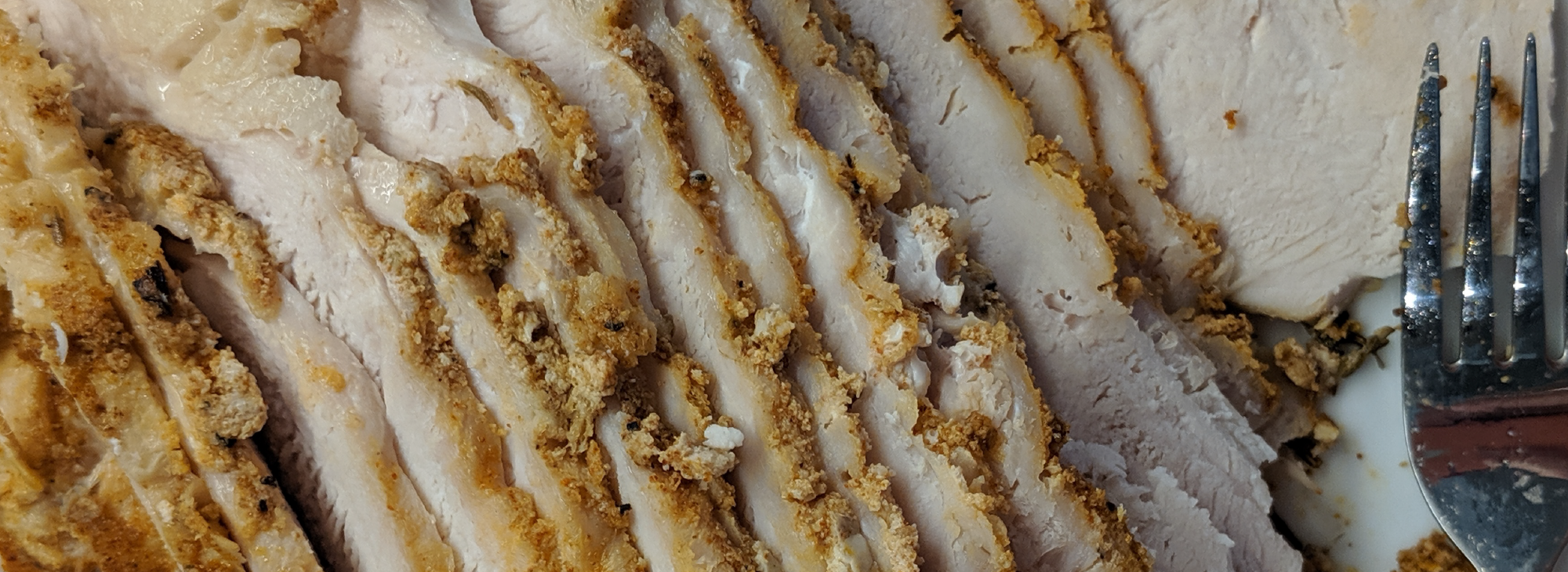
Last school year, we challenged ourselves to have a full year of homemade lunches with no repeats. To make things more challenging, we also tried to make sure our lunches were as healthful as possible and contained minimal processed foods. Our year-long challenge left me plenty of time to experiment with finding alternatives to deli processed meats and homemade bread. By far, my boys’ favorite is this simple turkey breast recipe that yields tender, delicious turkey breast meat that’s perfect for any sandwich. And, because it’s cooked in a slow cooker, it leaves you plenty of time for all those other things on your to-do list.

Homemade Sandwich Turkey Breast

3-4 pounds turkey breast, thawed (we use the Butterball turkey breast roast)
1-2 teaspoons olive oil
1 teaspoon paprika
1 ½ teaspoons garlic powder
1 ½ teaspoons onion powder
½ teaspoon thyme leaves
Sea salt and pepper, to taste
1 large yellow onion, sliced into 1” wedges that can lay flat
1 small head of garlic, cut in half across the cloves

1. Drain thawed turkey breast and, if using a Butterball turkey roast, discard the gravy packet.
2. In a small bowl, mix together the olive oil, paprika, garlic powder, onion powder, and thyme leaves. It should be thick and saucy, but spreadable.
3. With the turkey breast still in its netting, rub the olive oil paste around the top and sides of the turkey breast.
4. Quarter the onion and halve the garlic so that they can lay flat and place into the slow cooker.
5. Place the turkey breast roast on top of the onions and garlic and cook on low for 6 hours.
6. Once fully cooked, remove turkey and cool until it’s easily sliced. Voila!

Pro Tip: This recipe also freezes well! Slice to desired thickness and freeze between pieces of freezer paper in a sealed plastic bag. To use, simply thaw overnight. We find that our turkey breast can last 3-4 months in the freezer.