Check Your Blind Spots

Each one of us is fighting a battle that no one else knows about. Battles come in all sizes, from small to immeasurably big. Sometimes I hear about them from a fourth-grade boy who doesn’t look up from his shoes when he speaks. Or from an eighth-grade girl who hugs and doesn’t let go for a minute or two. Or even from the high school athlete who doesn’t seem to have a care in the world, except he does.

I present an anti-bullying/pro-kindness workshop to over 20,000 Texas students each year. It is my goal to speak to as many educators, students, and parents as I possibly can. It is also my hope that I can motivate kids to make changes themselves. I am inspired by this incredible generation of students and how they are going to change the world. I hear so many amazing stories of kindness, generosity, empathy, and acceptance. I also hear of heartbreak and hurt. It is a constant reminder that growing up is astonishingly hard.

One story has stuck with me for years. I met him as I was leaving a campus to grab a cup of coffee before my afternoon workshop. I had my hand on the door to leave when I heard a deep voice calling my name from behind. When I turned around, I had to look up. “Jonah” towered over me at six foot three. He asked, “Would you have lunch with me? I am one of the kids you talk about. I am one of the kids who sits by themselves at lunch.” I sat down across from this young man at an empty table in an otherwise chaotic lunchroom. He informed me no one would sit with us. No one sits there but him. The rest of the cafeteria was standing room only. The thunderdome of high school played around us as he spoke. Jonah shared that his bullying situation got worse in middle school. Everyone always made fun of him for being poor. They would make fun of his clothes and his mother’s car. They would call him dirty even though he would take special care to shower before and after school every day to make sure he wasn’t.

By the time Jonah entered high school, some of his bullies started to throw handfuls of pocket change at him because they knew he would pick it up. Jonah told me he would usually ignore the pennies and nickels, but he would always pick up the quarters. He hated picking them up, but he knew it cost thirteen quarters to wash his little sister’s clothes and that maybe, if he could wash her clothes, no one would call her dirty or gross either. Maybe no one would know she was his sister. Maybe no one would know she was poor. As we sat in an otherwise crowded lunchroom, no one stared at us or stopped to say hi. No one sat at our table, even though there were few other seats. I felt like we were invisible.

“A simple act of kindness might not change the whole world for everyone, but it can change at least one person’s world.”

The next day I met with students from the school determined to make their campus a softer place. They formed a Kindness Club and we spent the afternoon brainstorming youth-led kindness initiatives. The air was electric with positivity and hope, but I couldn’t shake Jonah’s story. I asked one of the leaders of the group if they knew Jonah. They paused and then recalled he was in their English class the year before. I asked them to tell me about him. They shrugged and said the only thing they knew was that people threw change at him. As the words left their mouths, I saw realization wash over their faces. Their indifference had made Jonah seem invisible. The students on campus saw the behavior towards Jonah day after day and remained silent. It was just something that happened. It just wasn’t happening to them. It was just part of the thunderdome.

I often tell students, “If you say nothing, it means you approve.” So often the least likely person to do or say anything about bullying is the person being bullied. How different would it have been if maybe the very first time someone threw change at Jonah the best friend of that person told them to stop? How different would it have been if someone paused to help or reported the behavior? How different would it have been if someone sat down at that empty lunch table once in a while?

The students from this campus were incredible kids. They desperately wanted to change the world in such huge ways. Hearing their dreams on how to make a kinder world was inspiring. It was shocking to them that they didn’t need to look much further than their own backyard or lunch table. They just needed to shed their indifference and open their eyes to the blind spots.

I encourage students all over the state to check their blind spots. A simple hello, a borrowed pencil, or being a friend are all ways to create a softer space. A simple act of kindness might not change the whole world for everyone, but it can change at least one person’s world. If we all take a moment to look around and check our blind spots, we will discover that no one is invisible and the change we want to see in the world might be as simple as sitting down at a lunch table.

As we begin another school year, sit down and talk to your students about the importance of kindness. Talk to them about people who may be different. Talk about ways to be kind. Talk to your students about how to confront their friends if they make hurtful decisions. Some of these conversations are tricky to navigate. But we, as parents and teachers, owe it to our children to have them. By enabling our children to be the same kids who say hello or sit at the lunch table, we are helping to transform all campuses into softer places.

Growing up is hard work. There is no instruction manual. We have to write it as we go along. But for me, Jonah’s story became its own chapter.
Time Waits for No One

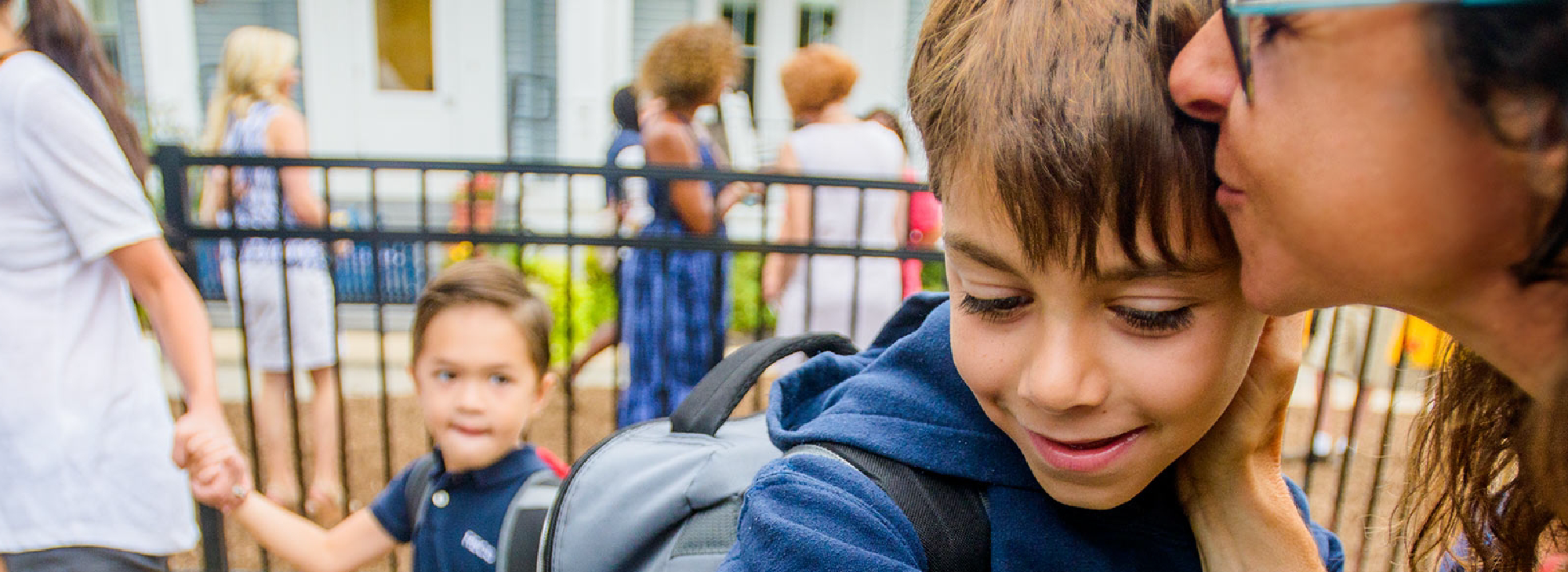
This morning, as I was out for my early morning walk, there were signs of school starting everywhere. I saw school buses, more traffic than usual, people in a hurry, and of course, back to school “first day” photos staged in front yards. I saw a mom capturing the smile of her elementary-aged daughter and a high schooler boasting her new letter jacket – on a very hot Texas morning, I should add.

It was eye-opening. The two short blocks between these photos underscored how quickly time goes by and how fast our children go from elementary to high school. Just as the country song by Kenny Chesney, “Don’t Blink,” reminds us, our children sail from kindergarten to a senior in high school in a blink of an eye.

One of my sons is a college graduate now and has started his career. My second son is a college sophomore. As a parent, I’m passed those back to school days, but on mornings like today, these proud parents remind me how fast the years go. I fondly remember the hustle and bustle the night before school starts. And then the rushing around the next morning – preparing breakfast, packing lunches, and making sure their clothes and hair were neat and presentable. With so much stress and activity, we were all exhausted by day one.

A tip to parents: don’t miss the special moments. Slow down. Watch and listen. When your child comes home and talks about their day, put down your phone, sit, and REALLY listen. Speaking from experience, someday you will look back and ask yourselves, “Why did I rush so much?”

Get to know your children’s teachers. Establish communication with them. Get involved, even if you can’t physically go to the school on a regular basis. Not every volunteer job requires being at school. Technology provides a wonderful way to be involved in your child’s education. Time and time again there’s evidence that parent engagement equals student success. It’s easy to say, “I don’t have time.” I say, “We can’t afford to not make time.”

Our children will often act like they don’t want us at school, and that’s particularly true during the middle and high school years. But I believe they really do like us there, even if they don’t acknowledge it on the spot!

The 180 days of each school year really do pass quickly. Be present for your children because someday you will be just like me, recalling those days gone by and watching others living your best years.

Saying YES! to Leadership

I would like to thank everyone who made the YES! program possible. From the UT staff at the Annette Strauss Institute for Civic Life to the leadership of Texas PTA, I commend everyone for making this program a reality for youth leaders across the state, for involving my generation, and for their sincere endeavors to make a difference.

When I first heard about the program from my father, who had seen it in an email, it sounded like something I would enjoy. After reading over the program description, I realized YES! fit very well with my own interests and goals including civic leadership and engagement. Since first applying to be a part of the inaugural Class of 2019 to then learning of my acceptance into the program, I was excited by the opportunities that awaited me in Austin!

I was greatly impressed by how the program was organized – the various learning sessions were seamlessly integrated and the content from any one session carried over to the next with everything complementing one another. The topics were so incredibly relevant that they instilled in me encouragement and motivation to take these ideas home and make a positive impact and difference on my campus and in the community that I live.

I always knew that I had a love for civic service and giving back to the community, but YES! turned that spark into a raging fire! The youth attending the program represented a diverse group of students who, despite having very different ambitions for the future, all shared one clear goal – to become more civically engaged and to actively contribute towards the betterment of their schools and communities.

My experience working with this group could not have been any better. From the level of speakers to the like-minded students and leaders brought together, the whole three-day experience made a huge impact. I left excited and energized.

So what’s next? I plan to organize a political event at the University of Texas at Dallas to bring awareness and inform more people of the issues impacting our community and the ways everyone can contribute to help resolve these issues. This would never have been possible without the incredible training I received at YES!

I am confident that this program will go on to educate more students from my community and I can’t wait to see what the future holds.

Looking Forward

What an incredible year! We have been busy and very successful. I am excited and proud to share just a little bit of our success.

Early on, our PTAs took on the challenge to help our association reach 500,000 members by Rally Day. Through hard work and perseverance, Texas PTA reached this membership milestone in February. There’s nothing PTA can’t do when we are determined to use our powers to ensure the well-being of Texas children. Thanks to your continued efforts, we went on to exceed the half-million mark (514,072 members as of this writing!) to earn the greatest membership increase of all state PTAs across the country. Because of this accomplishment, Texas PTA will be awarded at the National PTA Convention in June. A big shout out to Vice President of Membership Marni Kaner for leading the way!

Reaching half a million members in February was just the start to our most successful Rally Day yet with over 2000 volunteers joining us in Austin, including a thousand students.

On February 25, PTA volunteers lined the pews and aisles of the historic First United Methodist Church for the Priorities Caucus. We heard from many honored guests including Speaker of the House Dennis Bonnen and Commissioner of Education Mike Morath.

Standing room only, the Youth Caucus was especially impressive. Students were well prepared and clearly felt confident and empowered to speak with legislators, staffers, and other guest speakers on issues of importance to them and the whole of public education in the state. Kudos to teachers and parents for fully educating them on Texas PTA’s legislative priorities so our students felt empowered to advocate on their own behalf. Training up future leaders is an important component of the work of PTA.

Our association’s influence on pending legislation at the Capitol has never been as clear as it was this past session. Our volunteers were quick to respond to action alerts in overwhelming numbers. Our collective response to certain bills not only caught the attention of key legislators but moved them to work with Texas PTA and address our concerns. That’s the power of PTA.

President-Elect and Advocacy Chair Suzi Kennon will share more details on our successes this past session with you soon. As for now, the bills are sitting with Governor Abbott waiting to be signed. Fingers crossed! All in all, we had a very successful, albeit intense at times, 86th legislative session. Many thanks to Suzi, Ellen Arnold (Texas PTA’s Governmental Affairs), and the Advocacy Committee for the many hours they spent to ensure Texas PTA was diligent and purposeful when advocating for our children.

Texas PTA Leaders and volunteers: Great work! You stepped up and together we made a difference for Texas students and schools!

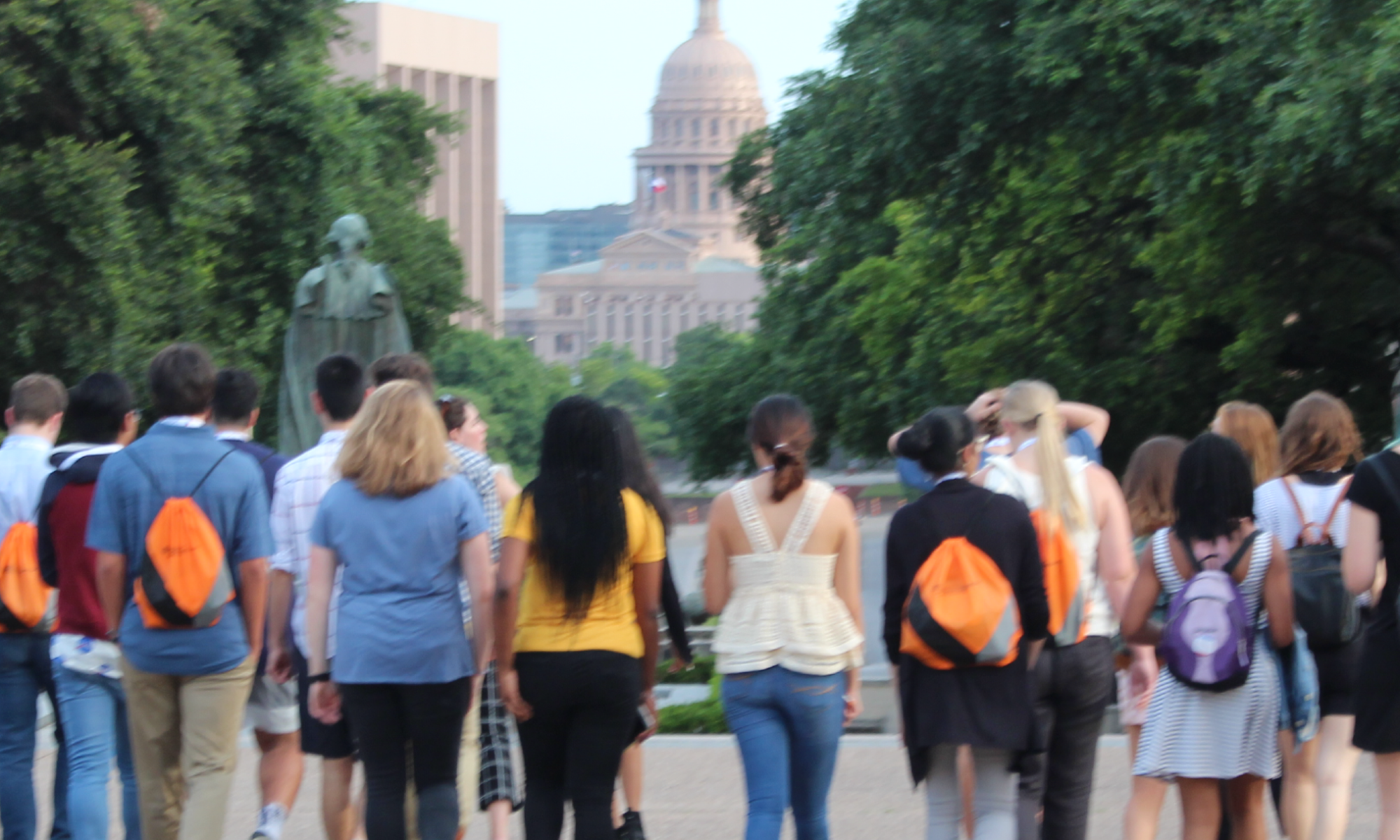
As you ease into the summer, know that the Texas PTA Board of Directors continues to put in the work. During the first few days of June, we embarked upon our first ever YES! Youth Empowered for Success summer session at UT Austin in collaboration with the Annette Strauss Institute. 20 rising juniors and seniors from across the state arrived in Austin to learn about policymaking and the art of civic engagement. We look forward to hearing how they will apply this knowledge in their own communities.

Next, we’re off to Columbus, Ohio, for the National PTA Convention in June. We look forward to seeing many of our volunteers there as we exercise our (Texas-sized) voice on key business items, network, and learn from colleagues in other states.

I’m excited to announce there are several Texas PTA State and Council Leaders who will present at the convention, sharing the great things going on in Texas PTA. This year’s convention is made extra special because our own Leslie Boggs (Texas PTA President, 2014-2016) will be installed as the next National PTA President. Congratulations, Leslie!

Once we’re back from Ohio, we’ll wrap up the final details of LAUNCH. We look forward to seeing you at the Gaylord Texan Resort & Convention Center in Grapevine, Texas, July 19-21. With over 150 workshops available to enrich the volunteer experience, there is certainly something for everyone! And, of course, a lot of fun is planned, too.

In October, we will celebrate Texas PTA’s 110th anniversary. These festivities will kick off at LAUNCH, beginning with a panel of past State Presidents who will share stories of their PTA journey. I encourage all Leaders to begin gathering the history of your PTA.

Spending three days with passionate, eager, and knowledgeable volunteers from across the state is just the energizer needed to prepare us for back to school and another incredible year in PTA. You will not want to miss LAUNCH!

I want to recognize someone who truly exemplified service and advocacy, Karen Slay. Many of you had the privilege to serve as a PTA Leader during Karen’s term as State President, 2012-2014. She was committed to advocating for children far beyond PTA and even state lines. I know she is smiling on us with pride as we carry the torch and champion for our students. I know Karen would have been right there beside us on the Capitol Steps for Rally Day if able. Help us honor Karen’s memory by continuing her legacy and advocating for every child with determination and excellence.
Be Sun Safe Everyday & Everywhere

As we approach long summer days filled with more time spent outdoors, one of the most important things we can do for our children is teach them how to be sun safe. The sun emits powerful ultraviolet (UV) rays that can harm our skin and potentially lead to skin damage, sunburn, and even skin cancer.

According to the American Academy of Dermatology, one blistering sunburn during childhood can double a person’s chance of developing melanoma, the most deadly type of skin cancer. What’s more, half of our lifetime sun exposure occurs before the age of 18; therefore, it is beneficial to engage children early to foster better sun safety behaviors across the age continuum and help reduce their lifetime risk of developing skin cancer.

Getting children to practice sun-safe behaviors may not always be easy. So, it becomes even more important to make sun safety fun and something children want to do. As a parent of two young children, a key priority in my household is to make sun safety relatable and easy to understand. As an example, I explain that sun safety protects our skin much like wearing a helmet protects our heads or brushing teeth protects our teeth and gums. The following are additional strategies to consider this summer and year-round.

Model Behavior

Sunburn during adulthood can also lead to increased skin cancer risk. Practicing sun safety will show children that you think sun protection is important for yourself and for them.

Use sunscreen and lip balm

• Use broad-spectrum sunscreen, SPF 30 or higher
• Apply sunscreen at least 30 minutes before going outside
• Re-apply sunscreen every 2 hours, and soon after sweating or swimming
• Spread sunscreen generously (enough to fill a golf ball or shot glass) from head to toe and don’t forget the nose, ears, neck, and back of the hands.

Parent tip: To make sunscreen application engaging for your child, make fun shapes or write your child’s name out with the sunscreen on their arms and legs. Depending on your child’s age, ask them to spread the lotion evenly on their skin.

Cover up

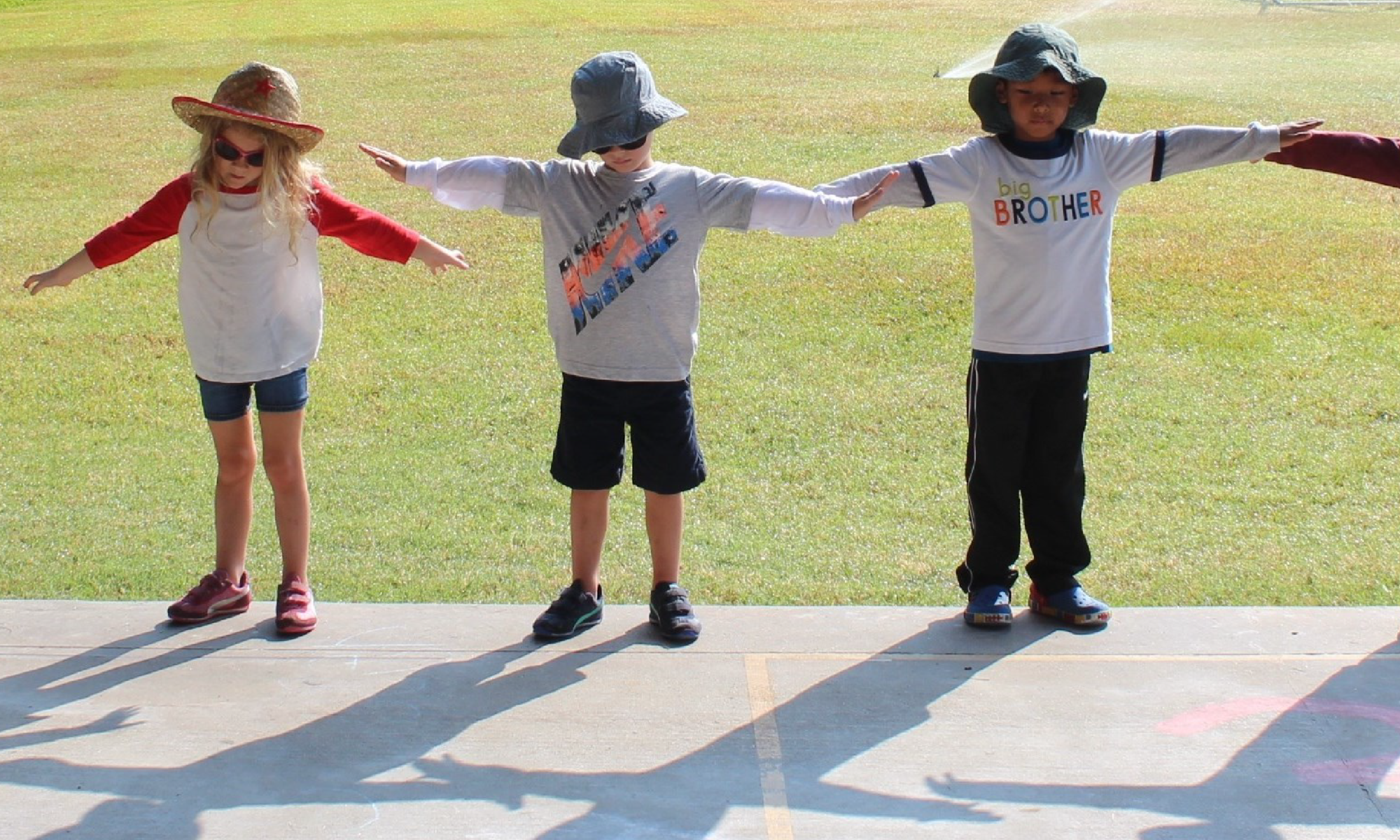
Wear wide-brimmed hats, sunglasses that block 99-100% of UV rays (check the label), and protective clothing such as sleeved shirts (not tank tops) and knee-length or longer shorts, skirts, or dresses.

Parent tip: For maximum sun protection, consider having your child wear UV-protective clothing especially at the pool or beach.

Find Shade

Aim to plan outdoor activities in shaded areas whenever possible. If there is no shade, be creative – use umbrellas, tarps, or tents.

Note: Between 10 am and 4 pm, the sun’s rays are more harmful. Ensure that you and your child are extra-protected during this time by engaging in all sun safety behaviors described above. Outdoor activities can also be planned for earlier or later in the day to avoid the midday sun, when possible.

Make Sun Safety Fun

The University of Texas MD Anderson Cancer Center developed Ray and the Sunbeatables®: A Sun Safety Curriculum, which features superhero characters who travel around the world using their sun safety superpowers of applying sunscreen, finding shade, and wearing wide-brimmed hats, protective clothing, and sunglasses.

Consider relating sun safety to the Sunbeatables superhero characters or other characters that children enjoy. Use songs (the Sunbeatables Program includes a few known household tunes such as “Are You Sleeping?”) and be creative with sun safety games.

Parent tip: Use shadow length to demonstrate when it is safe to be outside. During early morning and late afternoon, shadows are longer. During 10 am to 4 pm, shadows are shorter or there is no shadow. This means that the sun is high in the sky, directly overhead, and the sun’s rays are more harmful. Encourage your child to come inside or play in the shade when their shadow is shorter.

Remember that sun safety is critical year-round, even on cloudy or cold days as UV rays can still reach the skin. Advocate for sun safety at your child’s school (like encouraging shade structures be placed in outdoor play areas, updating sun safety policies, etc.) and ask the school to learn more about sun safety initiatives as well as the free resources currently available to them. Work with your child’s teachers and emphasize the importance of sun safety both at school and at home. This is yet another important way that you can positively impact your child’s health for the long-term.

Sun Safety Resources

Sunbeatables Program: An evidence-based sun safety program targeted to preschool through 1st grade students, developed by MD Anderson

Be Sunbeatable™: A sun safety program that builds upon key messages from the Sunbeatables Program targeted to 2nd through 5th grade students; co-developed by MD Anderson and Scholastic

Reducing the incidence of melanoma through primary and secondary prevention initiatives is among one of the shared goals and key partnership strategies between MD Anderson’s Melanoma Moon Shot™ and the cancer prevention and control platform. The Melanoma Moon Shot™ and platform are part of MD Anderson’s Moon Shots Program™, a collaborative effort to accelerate the development of scientific discoveries into clinical advances that save patients’ lives.