

Let’s Check In

Schools are closed. We are asked to flatten the curve by staying home. Things are changing so quickly that by the time you process one big change another one comes around. I am 38 years old, and this is a hard pill for me to swallow.

I wondered how many of them are Googling, “What is a pandemic?”

I couldn’t help but wonder how our young people are doing. Are they self-monitoring how much news and information they are taking in? I wondered how many of them are Googling, “What is a pandemic?” Or how many of them are actually talking to their parents about what they’re feeling.

I am a public speaker and speak to over 25,000 Texas students every year. Many of them follow me on Instagram. This week, I reached out through Stories and asked, “How are you today?” The responses and messages came flooding in. Students are worried. They are sad, grieving, angry. And they are nervous. Thankfully, they are also very resilient.

This mandatory pause button on the school year looks different depending on who you ask. Some kids have settled in and found comfort just hanging out in their rooms for the duration. For some students, this has been devastating. Musicals were about to open; UIL competitions were all underway; sports tournaments were being played; and prom dresses were being bought.

The hustle and bustle of the school year was full steam ahead until it all abruptly came to a stop. Many dreams were deterred in a few short days. I know this is bigger than prom. I know this is bigger than seeing friends or throwing a birthday party. I know this, but I am also 38 years old. Grown folks have weathered storms long enough to see the bigger picture. To our young people, THIS was their world, and it is now on hold. They are grieving, and it’s not okay.

As the grown people, we need to lean in and listen to these kids. We need to acknowledge that this is happening to them in a different way than it is happening to us. We need to reassure them, but more than anything, we need to listen. Last night, I leaned in to listen.

This is what I heard.

“I have been saving for my senior trip for over a year and it’s cancelled. I won’t get money back and I won’t get a senior trip. LAME.”

This is lame. I can only imagine how disappointing that must be. The senior year is supposed to be THE year memories are made. It is also a yearlong goodbye to life as a child under the protected watch of your parents and school. Imagine having that taken away suddenly.

“I had to share a frozen dinner with my brother. My mom is a waitress. No tips. We don’t have grocery money.”

For some students, school is where they receive food. Even though districts are working hard to implement programs to help feed these students, the immediate uncertainty is scary for them. I let this student know what her district was doing, and she was thankful to be told. She didn’t know because she is 12.

“I’m really scared.”

So many of our children are afraid, worried, or anxious. We need to open communication with our own kids, even if they haven’t asked questions, and encourage them to check on peers.

“I’m mentally exhausted. Anxious.”

I feel this. I had to implement a self-care program for myself: getting up at a normal time, showering, getting ready, going for walks. I know personally that when I don’t have a schedule I begin to unravel. Self-care is so important, and it looks different on everyone. One of my kids centers herself by creating. When she gets stressed or worried she pours herself into art. Another of my kids has a tight network of close friends who work through problems via Facetime. I normally have pretty stringent rules about how long they can be on their phones, but this week, I pulled back a bit. I know that self-care for her means communicating with people.

The Class of 2020 may be a graduating class like no other graduating class before it.

This has been an upside down week. We need to reassure our young people that life will resume. We’re on pause, not on stop. One thing I know for sure: this generation of kids will create so much beauty from these challenging days. They are going to come together and create big things. They are going to teach us so many lessons about patience and gratitude. The Class of 2020 may be a graduating class like no other graduating class before it.

This is a bump in the road. A sizable bump. But in the meantime, as we are wading through these uncharted waters, lean in and listen. Ask your student, “How are you doing today?” We are all in this boat together. Let’s check in.

A Conversation on Diversity with Sheri Doss

Sheri Doss is Texas PTA’s first black president since the merger of the white and colored congresses. She stands exactly five feet, one inch tall, speaks quietly but matter-of-factly, and juggles all things with grace. She worked in the telecommunications industry before embarking on her PTA leadership journey. With 18 years of PTA experience, Sheri has seen it all. We sat down in the conference room at the Texas PTA State Office for a conversation on diversity.

This Q+A has been condensed for brevity.

Magen: Looking back, we can see the level of influence PTA members had on schools, communities, legislation, etc. The history speaks for itself in terms of how that influence was wielded in amazing and not-so-amazing ways. Talk about your perspective as the first black president of Texas PTA.

Sheri: I have been waiting for this question. To be honest, I don’t think my experience has been different from any other president’s. I don’t think that being African American has been a pro or a con to my leadership except that it sends the message that this level of leadership is open to anyone, not just one group anymore. That’s huge!

But I didn’t want that to define my term so I didn’t focus on that. I am who I am and I focus on being a good leader.

I want to leave a message that you can’t equate who is a good leader just by how they are wrapped.

Certainly, I feel extra pressure to focus on diversity and inclusion. Being thrown into this leadership role is mostly positive, but I do feel pressure to not let anybody down. I recognize how important it is—for everyone really—but especially for people who look like me to see someone that looks like them in this position.

I just try to be me and see you as you. And I will say something about diversity and I will say something about inclusion. But it’s not because I’m African American, it’s because it is the right thing to do.

In a New York Times report about funding disparities in public school districts, Sarah Mervosh wrote: “[The report] found that more than half of the nation’s schoolchildren are in racially concentrated districts, where over 75 percent of students are either white or nonwhite.” What are the ways PTAs and Councils can combat or address segregation at their schools?

One of the ways I think they can open up that channel is to celebrate the differences. When I was installed, part of my speech was about diversity and how much we’d been working on it but also about inclusion. Inclusion is about asking, who’s missing?

Your PTA board may look like the demographics of the community. True inclusion, though, would be to not stop there but to bring in all types of people, not just one-offs. Once you bring them in, learn and celebrate the differences rather than fighting the differences.

Allowing inclusion to be a thread through all that you do is the key. It’s easy to send subliminal messages that [all people] are not included and [all people] are not wanted. To the kids and to the parents who walk the halls and don’t see anyone else like them, that could be a message they aren’t welcome.

How does diversity make PTAs better?

Diversity isn’t a whisper. This is who we are. We celebrate it!

It brings more and better ideas. Each person grows as a result of exposure to those differences. It helps bring everyone together and focuses on the community to make a real difference. There’s strength in numbers. The only way to get those numbers is to pull everybody in.

In our mission, we say we work for all children. But if you only have parents from certain demographics, it doesn’t seem that way.

What are the ways you have seen PTAs promote diversity among their membership?

They have been intentional about seeking out leaders all over the district. Some tend to have leaders only in one part of the district. Bringing all different people into the fold and asking them to step-up is one way to keep them.

As you are wrapping up your term, do you have anything else to say about this diversity and inclusion conversation?

It has been a fantastic term. I haven’t experienced any discrimination that I’m aware of. I’m excited to leave a legacy of excited and engaged future leaders. They know that if we band together, we can make a huge difference. I hope I’ve sent a message that every single person has value.

‘Tis Still the Season!

As a pediatrician who takes care of hospitalized children, most parents would prefer not to meet me, at least not while I am at work. If they do happen to meet me, it is likely one of the most stressful days of their lives. Having a child become sick enough to be hospitalized is something every parent dreads. One of the most common reasons that children are admitted to the hospital, especially during this time of year, is influenza.

While becoming severely ill is something that, to some degree, we cannot predict or control, there are measures that we can take to help protect our children, ourselves, and everyone that we come into contact with. The first step is to learn more about influenza and to understand how some common misperceptions may be putting kids in danger.

First, what exactly is the flu?

Influenza, commonly known as “the flu”, is a contagious respiratory illness. It is caused by a group of different influenza viruses. The two primary strains that cause illness are types A and B. Influenza viruses are constantly changing; every year the virus looks a little different can sometimes sneak around the immunity we have from previous illnesses or from vaccines. This is why, unlike some other illnesses, you can catch the flu more than once. It is also why we see epidemics (when a disease affects more people than usual) or even pandemics (when an epidemic spreads between countries).

What’s the worst that can happen?

Though influenza is a virus like those that cause the common cold, it can cause more severe symptoms and may be associated with greater risk. The flu often comes on quickly and can include symptoms such as fever, chills, cough, congestion, sore throat, headaches, fatigue, and runny or stuffy nose. Sometimes the infection may cause vomiting and diarrhea in kids, though this is less common in adults. For some, the flu is relatively mild, but it can also cause serious illness and result in thousands of deaths in the United States every year. Many of these deaths are among previously healthy children. This flu season, the CDC has estimated that about 19 million people have gotten sick; 180,000 of those people have been hospitalized and 10,000 have died.

Who is most at risk?

Anyone can catch the flu and become severely ill, but there are certain groups of people that are more at risk than others. Children are more likely to catch the flu than adults, and they can experience some of the worst complications from the flu. Young children (including all kids less than 5 years old but especially those younger than 2 years old) are at higher risk for developing severe complications. On the other end of the age spectrum, adults older than 50 and especially those older than 65 are at higher risk for complications as well. In addition to age, certain underlying medical conditions, including things like asthma and diabetes, also make an individual more susceptible to serious complications. Any person with a pulmonary, cardiovascular, renal, hematologic, immunologic, or metabolic disorder should talk to their physician about the risk of the flu and taking preventative steps.

Prevention

The Flu Shot

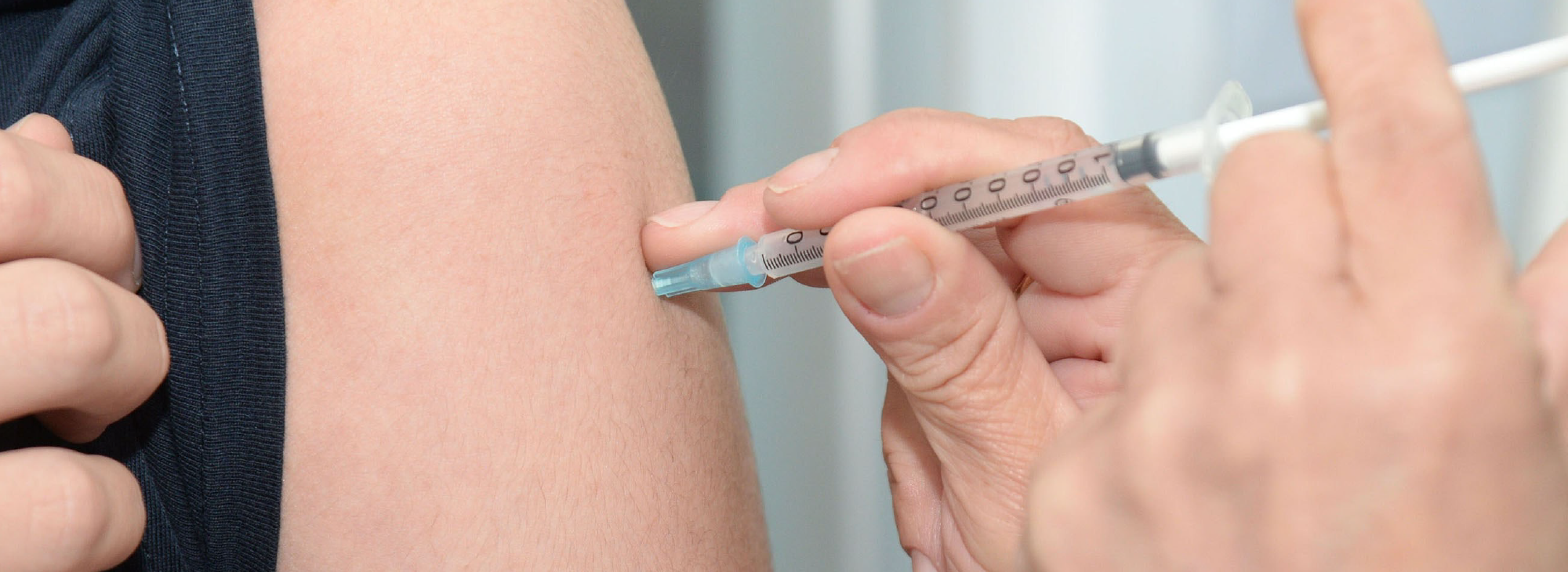
One of the most important things we can do to protect our children (and ourselves) is to get the flu shot annually. Each year researchers work to predict what the most common strains of influenza will be. Because the flu viruses are constantly evolving, the shot is never perfect. We have all heard stories of people who got their shot but still caught the flu later. This certainly happens. However, this should not dissuade us from getting the vaccine, as we know that immunized children and adults who catch the flu are less likely to be hospitalized and less likely to die from influenza.

Who should get the shot and when?

The flu shot is recommended for children and adults over the age of 6 months old who do not have contraindications. Children between the ages of 6 months and 8 years of age who are receiving the flu shot for the very first time should receive two doses of the vaccine, and all other kids should receive one dose. Ideally, all children should receive their shot as early as possible in the “flu season”, which starts around October and usually peaks sometime between December and February. Depending on the year, it can last as late as May. #FluBeforeBoo is a social media campaign that launched past this year to remind and encourage families to get their flu shot before Halloween. An earlier vaccination offers the most protection for the season, but the flu shot can still be protective if given at any point during flu season. When you are considering the flu shot for your children and yourself, remember the shot not only helps protect you but also all of the children you interact with. Some of those kids and adults may be at higher risk for complications and need everyone’s help to stay safe during flu season.

Who should not get the flu shot?

While the flu shot is safe for the vast majority of people, there are a few people who should talk to their doctor first. Children that have had an allergic reaction to the flu shot in the past should see an allergist to determine if they should have the vaccine. The flu shot may also not be recommended for children and adults who have had Guillain-Barre syndrome following a flu shot in the past. It is perfectly safe to give the flu shot to children who are currently experiencing minor illnesses, even those with fever. If a child has a more severe illness with a high fever, the flu shot may still be a good idea, but it is best to discuss with the child’s pediatrician to determine the best timing.

Fighting the Spread of Germs

In addition to getting the flu shot, people of all ages should be especially diligent in fighting germs during cold and flu season. Washing hands regularly with soap and water, especially after coughing or touching our mouths or noses, is incredibly important. This habit can be tough for kids to remember when they are busy playing and doing their school work, but parents and teachers can help teach young children how to wash their hands and remind them to do it regularly. It’s also important to remember to throw away used tissues and to wipe down frequently touched surfaces including, tables, toys, cabinets, cell phones, and door knobs to decrease the spread of flu viruses.

What if you still catch the flu?

Unfortunately, every year, many people will still catch the flu. While those that have had the shot are less likely to become severely ill or need to be hospitalized, they can still feel pretty terrible and spread the flu to others. In general, medications are not effective in treating the flu once you have it. In otherwise healthy individuals, Oseltamivir (better known by its brand name Tamiflu), if given early in the illness, may shorten the duration of symptoms. Unfortunately, Tamiflu can also have side effects including vomiting, diarrhea, headache, or insomnia in some patients. It is important to see your primary care doctor as soon as possible if you are experiencing flu-like symptoms to decide if Tamiflu is the right choice for you. Oseltamivir may also decrease the chances of certain complications or death in high-risk individuals, so it is always best to consult with your doctor if you have concerns. Additionally, if someone in your home is sick with the flu, it is important to also discuss giving preventative antiviral treatment to high-risk individuals in the home, as this may be recommended depending on the risk factors present.

Plenty of rest and hydration is the mainstay for recovering from the flu. Over the counter medication such as ibuprofen and acetaminophen can help decrease the discomfort of flu symptoms (such as fever and headache), but they do not treat the underlying illness. If you have flu-like symptoms, it is always best to stay home from school or work and not return until the fever has been gone for at least 24 hours. This will help protect others by minimizing the number of people who are exposed and help to slow the spread of influenza.

Resources

Healthy Children was created by pediatricians for parents and caregivers. This page provides an overview of the flu, as well as its prevention and treatment.

American Academy of Pediatrics (AAP) is an organization of over 67,000 pediatricians across the United States. Each year, they provide official recommendations on the prevention and control of influenza in children, and they have created this helpful handout on what early education and childcare programs can do to help stop the flu.

Centers for Disease Control and Prevention (CDC) not only provides an overview of the flu but has helpful features like statistics on influenza activity across the United States and a vaccine finder to locate the flu shot in your area.

Additional Contributor

Dr. Emily Dewar is a first-year pediatric resident in Austin, Texas. When she’s not in the clinic or the hospital, you can find her discussing social determinants of health (with anyone and everyone) or trying to teach her dog not to jump on strangers.

The Warning Signs

Tricia Vasquez became a crusader against vaping due to a “sticky” situation. The Lubbock mother of three high school students was making a back to school poster for the Monterey High School PTA and was searching for a glue stick when she reached into her 15-year old daughter’s backpack and pulled out a large vape. Her shock gave way to disappointment, but it also led to a great mother-daughter conversation.

“She was open about it, and admitted she was doing it because everybody else was trying it,” says Vasquez. That conversation was the catalyst that spurred her to action. She did a lot of research, talked to a multitude of health care providers and counselors, and has become an outspoken activist about the dangers of vaping and how parents and educators in Lubbock ISD can collaborate against it.

Monterey’s PTA, at Vasquez’s urging, has taken the initial lead in our district’s efforts to educate families and children about the health concerns for those who vape. Promoting healthy lifestyles at home and at school fits the focus for the group’s efforts to secure a School of Excellence designation from National PTA.

In late January, Vasquez was instrumental in organizing a town hall meeting for Monterey students and parents. The focus was on three questions: have you ever vaped, how recently, and did you know the contents of what you were inhaling? Vasquez says the scariest part about this is in a sample size of 150 students, 28% admitted they vaped, and about 10% had no idea what they were using.

Paulett Rozneck believes the percentage of users district wide may actually be a little bit higher. She is the coordinator for student health services for Lubbock ISD. Principals in our district’s five high schools and 11 middle schools tell her they have confiscated numerous vaping devices from students. She says it is easier to conceal because they can stuff it up their sleeves, camouflage the smoke by blowing it into their hoodies, or pretend like they’re coughing and exhale. She says the attraction is the same as smoking cigarettes, only this is the newer, cooler thing to do. Smoking is passé, it’s what parents do.

Vaping is much more potent than smoking cigarettes even though it’s advertised as a better alternative. Rozneck says it delivers the same kind of kick, but with a higher concentration of nicotine because it’s not being controlled. She warns that no one really knows what’s in these solutions. She says, “it could be grass, it could be anything that could be harmful to our kids.”

“She has a close relationship with her daughter but was not aware that she had been vaping for nine months prior to that backpack discovery.”

Vapes are also convenient to obtain. The solutions and vaping devices can be ordered online which is of great concern to Vasquez. She says you just don’t know what your children are doing, even if you think you do. She has a close relationship with her daughter but was not aware that she had been vaping for nine months prior to that backpack discovery. There isn’t the tell-tale smell of smoke. Vapes are easily hidden. She suggests parents do a little detective work. Check packages ordered online and examine credit cards for unusual purchases. Look for the signs.

Rozneck says there has to be a conversation, even if you don’t suspect your child is vaping. As a conversation starter, admit that vaping is attractive and it’s the newest thing, but explain the truth about its harmful effects. It can give you the lungs of an 80-year old smoker. It can destroy you.

Vasquez says the conversation with her daughter was matter-of-fact. She didn’t use shock value because she doesn’t think it works. She also recommends not to go it alone. Enlist the help of a school counselor or other adults who your child trusts.

What are Lubbock ISD educators doing to promote awareness of the dangers of vaping? Two Lubbock ISD schools, Estacado High School and Irons Middle School, recently participated in the Texas Tobacco Survey. Plans are in place for seven additional schools to participate in the Texas survey for drugs, smoking, vaping, and alcohol. Rozneck says this will provide more data to help enforce the fact that vaping among teens is at a dangerous new high. She believes educating students and parents is key because most don’t realize that vaping is more harmful than cigarettes.

Rozneck is the point person for the survey which will be administered with complete anonymity. Parents will be notified two weeks in advance of the survey which will target middle and high school students. Texas A&M is the research body crunching the numbers. The survey will be distributed in paper form instead of electronically to better safeguard the identity of the respondents. Rozneck is confident the data will provide the basis for an educational program and lead to more rigorous policies and practices. She says, “I think it will give us more teeth.”

Vasquez now has a reputation as an expert on the subject. She’s been recruited for a statewide task force examining the prevalence of vaping. She says she started out as a concerned mom who now realizes that vaping is a lot bigger than she anticipated. Her kids and husband now call her the “vape lady.” She admits it’s a fitting nickname. “I’m a mom who is adamant that we must be aware of what’s going on before vaping ruins many more young lives.”

Tricia Vasquez is a panelist for Texas PTA’s Straight Talk: A Matter of Life and Breath, February 25, 2020, broadcast live on the Texas PTA Facebook page.

Your 2020 Safe School Checklist

From the moment they enter the world and we hold our children in our arms, we vow to protect them in every way possible. During those first few years, we let them explore the world, but not without a watchful eye — anticipating danger, big or small.

But as they get older and more independent, we send them off to school in the morning and the job of protecting our children from the dangers they can’t anticipate themselves expands to a village of people. We rely on school leaders and the systems they put in place to be the first line of defense if something should happen.

And when awful events at our schools occur — from a playground fight to news of a shooting on some remote campus — many parents give renewed focus to looking at the safety and security measures followed in their schools. They soon realize how daunting it is to consider every aspect: from prevention measures relating to mental health, to protocols around access to the school; and importantly, considering the law enforcement response and coordination of first responders.

Having spent years working in the security industry, with major entities such as the Department of Homeland Security, FEMA, local public safety agencies and first responders, and both public and charter schools across the nation — I have learned that every district has its own unique needs. However, there are a handful of things that are important to consider regardless of whether a school is large or small, urban or rural, or comprised of elementary, middle, or high school students.

So, here are some things parents should look for in a safe school:

Does the school have a working partnership with local emergency response and law enforcement agencies?

Did you know that almost every after-action report from a school shooting or public mass violence event cites a failure in communications as a contributing factor to loss of life? We know that saving time in response and incident resolution can ensure better outcomes for both victims and first responders.

And while anyone, anywhere, at any time can dial 9-1-1 and emergency personnel will deploy to their location, situational awareness, readiness, and proper coordination between school administrators, security personnel, and law enforcement agencies can save precious minutes during an emergency.

One of the best ways to ensure that first responders are in-the-know about your child’s school and can deploy a swift and targeted response to an emergency is to use software to bridge radio, cell phone, and video communications. Safety technology has come a long way from when we were students. Today, school personnel can hit a smartphone panic button that transmits real-time video from building surveillance cameras so that first responders know exactly what’s going on in the building. That same software can allow school leaders to quickly communicate with law enforcement via radio, phone, or text. Finally, it can give first responders access to the school’s public intercom system, as needed.

A school district that has installed this interoperability software in partnership with local law enforcement and emergency responders is ahead of the curve in terms of readiness.

Does the school supply life-saving drugs?

If you are a parent of a child with an allergy, you are likely prepared for a worst-case scenario — including sending your child to school with an EpiPen. But what if you aren’t aware of an allergy? According to the American College of Allergy, Asthma & Immunology, food allergy symptoms “can appear at any age” and a child or adult can even suddenly develop an allergy to a food they have eaten time and time again.

It’s important to ask your child’s school if they have a fresh EpiPen or Benadryl available each school year, and what the protocol is for dispensing it. What are the signs a child needs an EpiPen administered vs Benadryl? What facility members are trained to administer the drug? How is emergency response notified? What hospital will the child be sent to after EMS arrives?

And allergies aren’t the only thing to be concerned about. Sadly, today’s opioid epidemic is creeping into our high schools. A 2012 study by National Center on Addiction and Substance Abuse found that about 17 percent of American high school students are drinking, smoking, or using drugs during the school day. It’s hard to think of our own children falling into this statistic, but if a teenager is exposed to a drug at school — it’s important to know if Narcan is available, or what the school’s protocol is if they expect a child is under the influence.

Being informed and involved is an important role for all parents, and districts that are ready for medical emergencies have a good understanding of how to care for their students.

Does the school provide a security briefing?

Many school districts organize a security briefing at the beginning of the school year to let parents know protocols and updates to facilities. This is a great opportunity to see what systems are in place for everyday security and worst-case scenarios. Attend and ask questions, specifically about the campus your child attends. It’s not only important that you know the details about school security measures, but in asking questions — you help administrators know that your child’s safety is a priority that needs to be addressed.

Something also to consider in these annual briefings is that Texas state laws, funding pertaining to our schools, and grant opportunities change frequently. For example — starting in 2019, more than $200 million dollars is available to Texas school districts for use improving mental health services and school safety improvements. Find out how your district is allocating this funding, and if they intend to take advantage of additional state and federal funding by applying to grants.

Proactive districts that keep parents informed often have a good handle on safety protocols and are open to evolving with the needs of their student and faculty populations.

Is the school both supportive and proactive on mental health services and the training of staff on mental health first aid?

In today’s world, it is vital that school districts are taking an active role in providing mental health and guidance services, offering support and resources to parents and guardians, involving health professionals; and in alarming cases, reporting issues to the authorities.

Texas is being proactive on this issue. In 2019 alone, over 10,000 school personnel in Texas were trained in Mental Health First Aid. Since August 2018, the Texas State School Safety Center has held seven threat assessment workshops with over 425 participants. Find out if personnel from your child’s school have attended any of these, or similar, training seminars.

Furthermore, Senate Bill 11 — signed into law in the summer of 2019 — provides districts with $100 million in funding for school-based mental health centers, the hiring of counselors, and other mental health needs, and provides $99 million in funding for the Texas Mental Health Care Consortium. Funding is available to every public school district and qualifying charter school in the state.

As a parent, it is also valuable to know what your school’s protocols are for reporting violent thoughts to trained health professionals, serious threats to the authorities, suspension, expulsion, and then future access to campus.

Districts that are both supportive and proactive on mental health issues help mitigate safety issues before they come to fruition.