Decisions

When it comes to parenting, decision-making is my favorite part of the job. I like being “where the buck stops.” However, this year, decisions are at the bottom of my favorite things list. It seems like we are faced with big, scary, daunting, pandemic-sized decisions every few weeks.

As the school year approached, my husband and I had to figure out if our kids would go back on campus or learn from home. There was clearly no right answer so we decided to keep them home. As September blurred into October, I winced remembering back to the spring when my youngest daughter asked if she would be able to trick or treat. Equipped with masks and hand sanitizer, we ventured to their cousin’s house, ten feet from the front door, for what would likely be their last Halloween trick or treating – or at least a semblance of that.

Then it was November. What about Thanksgiving? We imagined gathering outside of my in-laws. But as the holiday approached and numbers continued to climb, we decided that wasn’t a great idea. So, for the very first time, my little family of four made Thanksgiving dinner. Well, more like three of us. My apple pie is going down in the history books as the worst one ever – best described by my daughter as “a stale, tart, apple flavored cinnamon cereal with no sugar.” Awesome, exactly what I was going for. Thanksgiving this year was a two-hour Zoom call with extended family, minus one apple pie.

Yep, 2020 has been a heck of a year. I have made some heavy decisions and set boundaries that sting. And then came choir.

Choir is a big deal in our house. When the girls were tiny, they loved singing in school productions and watching the older kids perform. They would get wide-eyed when the high school choir, named Musicale, visited each December decked out in Victorian costumes. My oldest first saw them perform Christmas carols in the second grade. She stood up in the cafeteria after their second song, weaved her way through the criss cross applesauce maze, and found me in the back of the crowd. She pulled my sleeve down and loudly whispered, as seven-year olds do, “I want to be the one in the frilly dress when I get big.” When she did get older, she suddenly couldn’t think of anything more horrible than singing in front of her class. Twelve is a gloriously tricky age! But thanks to a persuasive choir director, she was inspired to give it a chance and hasn’t looked back. The sixth grader who never thought she could sing has grown into a varsity member of her high school choir; she even made Musicale this year.

Cue difficult decision.

The show choir starts practicing holiday music at the beginning of the school year, and November and December are usually jam-packed with caroling performances. Of course, this year looked very different. Caroling gigs, now optional, would be held outdoors with social distancing and masks. Great. However, in-person rehearsals were required to participate.

We had been home for 260 days. On one hand, I could count how many times we had another roof over our heads or sat in another car. Without much hesitation, I made decisions about birthdays, family visits, and vacations, but somehow this decision over caroling was the one that caused me to lose sleep.

I didn’t want to let down my wide-eyed second grader or the sixth grader who didn’t think she had the courage to sing. I wanted to give the girl who turned 16 in quarantine, the one so elated when she made Musicale, everything she dreamed of. I wanted to see my daughter finally put on that frilly dress, because this would all be over by December … right?

We went back and forth for a long time weighing the pros and the cons, the hypotheticals and the probabilities. Then it was decision time. To carol, or not to carol, that was the question.

She certainly looked beautiful in her frilly dress – a vision in blue satin elegance. Despite the height she has on me, I couldn’t help but see my second grader again. “Mom,” she said. “ How do I look?”

Thirty minutes later, we arrived at the caroling gig – giant hoop skirt intact. My daughter and a few other choir members stood far apart in the courtyard outside of a retirement community. Peaking through the window, I could see how eager the residents were to hear their young visitors perform. As the first few notes pierced the cold air, I saw the residents collectively lean forward to hear more. I couldn’t see smiles from behind their masks, but I did see tears in their eyes. The breath caught in my chest as a man stood up from behind his table and put his hand on the window as the choir sang “O Come, O Come, Emmanuel.” In that breath, I paused. I realized that all the decisions with no right answers had somehow guided me to that moment. I have cried so many times in the past nine months. I cried over the loss of the year, or because we were out of coffee, or sometimes for no reason at all. I have cried over many decisions. But when I saw that man’s hand fog up against the window, I cried because I saw joy. I guess I hadn’t seen it in a while, or maybe I was so caught up in all the decisions I forgot to look.

Our brains have been operating in decision hyperdrive for months. And we are physically, emotionally, and mentally exhausted because of it. But if you pause to look up, you will see the joy that still exists around you – one frilly dress at a time.
Addressing the Digital Divide: Texas PTA Forms Texas Digital Access Coalition

COVID-19 has forced each of us to reassess how we operate within our home, workplace, and community. The pandemic has magnified many systemic inequities that the Texas Legislature must address during the upcoming legislative session (beginning January 2021) and well beyond. Namely, the digital divide, a person’s lack of access to a reliable device and broadband internet connection, has quickly become one of the largest barriers Texans young and old have been forced to overcome.

When the pandemic shuttered school buildings across the state, Texas PTA became increasingly concerned by the reports of hundreds of thousands of students unable to access the digital tools needed to be successful in virtual learning. While the transition to online learning and working was difficult for most, communities of low income, traditionally underserved populations, and rural areas felt the strain more than others. Students around the state and country have been unable to effectively receive quality educational services without access to connectivity and devices.

Texas PTA also knows that student success isn’t entirely dependent on their experience in the classroom. Many community-based services—like access to healthcare, vocational training or employment, and e-commerce—are just as critical to the success of our youth, their parents, and the communities where they live.

According to Connected Nation Texas, almost 1 million Texans do not have access to broadband at home. And at least 333,000 households with connectivity do not have the minimum connectivity necessary to attend school, visit a doctor online, or work from home.¹

Texas PTA has joined with the Greater Houston Partnership to co-found the Texas Digital Access Coalition (TDAC) and advocate for reliable, accessible, and affordable connectivity for all sectors of our state. Aiming to address this challenge from a broader lens, TDAC is bringing together not only advocates for education but also representatives from the healthcare and workforce development industries and from rural, urban, and suburban community employers. In today’s world, digital access is tied to success in school, work, and every aspect of daily life.

TDAC will advocate for a comprehensive plan and long-term funding to address disparities across the state caused by inequitable digital access. It is critical that all Texans have access to affordable connectivity and devices needed to utilize programs and services that support and enhance educational opportunities; increase the availability of telehealth services; and that help adults prepare for, secure, and advance in jobs and careers; and participate in e-commerce.

The COVID-19 pandemic revealed a 21st Century truth – digital access and digital literacy are essential. They level the playing field throughout all aspects of our lives. Texas PTA is excited to be working alongside not only our friends in the education sector but also with those who serve the welfare of our students and families through healthcare, workforce, and commerce.


¹https://connectednation.org/texas/what-can-texas-do/

Endless Grace for the Endless Summer

The bell rings.

Break open the seal of your packet. This exam is timed. Please keep an eye on the clock. The clock is broken? Fashion yourself a sundial. Fill in the circles thoroughly and completely but make sure they are also blank. Remain seated and standing at the same time. Good luck.

Welcome to a very bizarre and very real world where up is down. Welcome to the endless summer. Over the past several months, parents have had to make some whiplash-inducing decisions. Never in my life would I have imagined having to decide whether to send my kids back to school because of a pandemic. I have always wanted my children to go to public school. You would be hard pressed to find a bigger cheerleader of public schools than me. Out of every piece of parenting I have relished in the past 16 years, I am lucky to say that school has been one of my favorites. Now I am asking myself, “Do I send my kids to school, or do I keep them home?” I can hardly wrap my mind around it.

In March, I was sure we would be back on campus in May. I was certain we would hold ceremonies and celebrate one another at the end of the year. I was certain we would have prom and a typical graduation where seniors walk the stage to accept diplomas. Then April came. I resigned myself to the fact that we would not finish out the spring semester in person. It was a hard pill to swallow, and it felt unbelievable and sad. That Friday before spring break, when we all walked away for what we thought would be a week, turned into the endless summer.

Usually our summers are pretty busy. My eldest works at summer camp, and my youngest is a very busy pet sitter for vacationing neighbors. Not this endless summer. This summer there was no camp. This summer everyone stayed home with their pets and, in many cases, adopted more. My family stayed home (literally within our four walls and fenced yard, perhaps the front sidewalk and an occasional drive) for over 100 days. Around the 50-day mark, I eased up on screen time restrictions. Around the 70-day mark, I pushed back bedtime and also breakfast. By the 100th day, I gave in and ordered Capri Sun in our curbside order. Meanwhile new pajama pants for the entire family were arriving to our doorstep in frequent deliveries.

It got hot. I started a garden. We dyed our hair. We played board games. We were chefs. We bought chickens. We built a coop. We made surprises for neighbors and left them on doorsteps. We took road trips. We drew with chalk. We made balloon animals. We watched the entire TV series Lost in under two weeks. We read. We set up a Zoom room in our master bathroom. We slept. We woke up. Rinse and repeat throughout the endless summer. I lost track of days and weeks as I fell into the pandemic loop. Then the question of when, why, if, what, and how for the new school year started to trickle into my newsfeed and inbox.

“This is crisis schooling during a pandemic, and none of us have played this game before.”

Is it safe to send kids back to school? Is it safe for teachers and staff? What about state and federal funding? What about the mental health of our children? What about social and emotional development? What about socioeconomically disadvantaged students? What about title 1 schools? What about equity? What about accessibility? What about working parents? What about third shift workers who usually sleep while their kids are at school? What about social life? What about senior year? What about getting back to normal? Every time I thought I had the perfect answer I found a hole. I attended many virtual meetings and town halls. I organized committees and searched for options. I wrote emails and made phone calls. I tried hard to find the right answer only to discover that there is no right answer. This is not the world as we know it. This is not school as we know it. This is crisis schooling during a pandemic, and none of us have played this game before.

Districts across the state will start school online for three weeks. After that, many families will either send their kids to school or attend virtual learning at home. And this decision needs to be made soon. Parents are looking into a broken crystal ball trying to make the very best decisions for their students and families. This pandemic doesn’t play by our rules. It doesn’t let us know what is going to happen next. Each family is faced with a headache full of unanswered questions and by carefully weighing each option they make a choice. None of the options make sense. Time is ticking by, and we have to pencil in our best answer knowing that it may look different from our neighbor’s.

The parent shame game is unfortunately a very familiar one. Bottle feeding verses breast feeding, stay-at-home verses working parent, preschool or playtime, sugar, potty training, bedtimes, diet, car seats, and everything from pacifiers to nicknames seem to be up for debate. Sadly, the parent shame game has adopted a new battleground, in-person school or distance learning. I learned early on that what works for one child may not work for another.

I remember how easy it was to potty train my eldest. When she was 18 months old, I simply told her, “Hey, I am not going to buy any more diapers.” It was that easy. She didn’t have one accident. I remember thinking how ridiculously difficult some parent friends were making it for themselves. I remember looking at them in disbelief as they bribed with gummy bears or described how much they shelled out for pull-ups. I judged them. Then my youngest daughter was born. I gave her the same line. She shook her head and then proceeded to have an accident five minutes later. Then she had an accident in the car seat, then at Costco … in the cart. Every day for over a year, I did a load of sheets in the morning wondering what I was doing wrong. That was one of my first lessons of motherhood. These precious indescribable wonders are not one size fits all and neither are families.

We need to go into this next chapter of decision-making in the time of COVID-19 with grace for our neighbors. We need to understand what may be easy for us, may be impossible for others.

As you sit down with families to make back to school decisions, make room for a teachable moment on the subject of grace. Remind them about the people who have worked hard to make this school year happen. Remind them about their teachers who have families of their own. Remind them about school staff who showed up on campus in masks and gloves over the summer to hand out laptops for distance learning. Remind them about their principals who poured over numbers and made some hard phone calls. Remind them about their school board who must carry the weight of big decisions during a difficult time. Remind them about the administrators who attended hours of professional development training so they can better connect with students online. Remind them about their PTAs who are scrambling to meet the needs of their school communities without being on campus.

I speak often about how very different this world is from the world we all grew up in. The world of pagers and pay phones seems so very far away now. We have had to adapt while raising our children. We have all had to invent new rulebooks on growing up because this world was not even fathomable just a few decades ago. We have adapted, and we will adapt again. We will make some rules that work and some that need to be rewritten. As we fizzle into a new season of endless summer, we need to give ourselves grace to do that.

The bell rings.

Pencils down. Please hand your packet to the front of the classroom. Since the scoring rubric is different for each of you, no grades will be given. You have all earned endless grace for the endless summer.

There’s (Literally) No Place Like Home

In light of the dark that’s going on, we want to help get your thoughts and actions on track, if they’ve understandably gone off road.

We are here to figuratively hold your hands, virtually have your back, and maybe, just maybe, make you smile, if even a smidgeon. No small feat. We know. But here goes:

5 things to remember if you’re a human and/or you’re working from home:

1. Tell the voices in your head to pipe down.

We really do have a say over what our mind says.

Even during normal times, we’re not that wise as to how often we go dark. Not to mention the fact that we have little clue as to where our (inner) light switch is.

Imagine NOW!!

You’ve heard the stats: according to science, the average human has about 12,000 to 60,000 thoughts per day. Of those thoughts, 80% are NOT ONLY negative, 95% of them are also the exact same thoughts as the day before. No wonder so many of us have such a hard time imagining our highest ideals/dreams for ourselves, LET ALONE curating the thoughts we want to be having in the face of so much uncertainty in the world.

HOWEVER, please, please remember, the minute we’re willing to catch a negative inner thought, it’s our higher self bearing witness. Please hear it. Please get a megaphone for your higher self. And by all means, please revoke your voice of fear’s unwarranted authority!

While you’re at it, question your theories and fight the fight to NOT believe your own hype.

A theory is when you have an opinion or are speculating about something and, subconsciously, you’re collecting evidence to prove it. Like, “you’re not good with time,” “you’ll go stir crazy at home,” “you need X, Y, and Z to be productive,” “you have to workout at a gym,” etc. Can you see, those particular theories influence the actions you take or don’t take when it comes to your productivity, time management, and your health/body?

Good news, your theories are not hard-wired. YOU created them. They are based on experience, observations, and learning since you were a baby and/or since you binge watched the news the other day. In other words, don’t believe your hype! We dare you to disprove your own theories. By all means, debunk them. Hurry.

Speaking of hype, watch the news … as in WATCH OUT for it.

Of course, be well informed. Just ALWAYS remember, the news is out to not only inform you, BUT keep you watching.

2. Design your day, and, yes, that means … design your quarantine!

At HG, we teach clients many, many, many things. Today, we’re going to show you how to design your day. Yes, even (especially!) from home.

Every morning, before your day even unfolds, you are going to write what we call a Designed Day (DD). What you put in your daily design is an accounting of how you want your best day to unfold, equipped with attitude and aspirations. You write it in the past tense, as if it’s already happened.

Your DD could go something like this:

Did a great workout. Best yet.
Led an amazing Zoom call.
Supported my colleagues.
Told my inner-doomer to quiet down.
Came up with the perfect plan to maximize this situation.
Was wildly productive – finished the five items on my to-do list.
Marked all 40 papers before 4 pm.
Set up 4 video dates.
Proud of myself.

Once crafted, you are going to send your DD to a group of your nearest and dearest (or at least one partner in productivity) who will hold you accountable for it. Not only does this practice of designing your day keep you connected to your fellow stuck-at-homies, it has you at the source of your day’s creation and not simply acting in response to it.

As the author of our lives (even if our story, without question, has taken a strange turn), we get to end our day, powerfully too. You know what you did and didn’t do so you can set yourself up for the next day. Everyone who is reading your daily designs also knows exactly how you did, and you know exactly how they did.

3. While you’ve got time, why not work on your relationship with TIME.

Do you two need couples counseling?

Put everything into your calendar. Yes, every last thing.

There are 24 hours in a day – that is it. Everything you want to do in the day has to fit in the day. Your calendar is your time accountant. It never lies! It always tells you exactly what is possible, what will happen, and what will not happen. If you try to keep it all in your head or even just a few things in your head in hopes “you’ll find the time”… how well do you think that will go? Magic is totally possible with time, however, for now, know the math still has to add up.

Be realistic and tell the truth (oh, that!).

Many of us are either overestimating and underestimating the amount of time something actually takes. Get more accurate about how long things actually take. Time yourself. Adjust your calendar accordingly.

Visit the promise land. (No flights necessary.)

One of the cornerstones of our methodology is Personal IntegrityⓇ. We’ve even gone so far as to call it the secret sauce to happiness, personal pride, and confidence.

4. It is. Possibly now more than ever.

Personal Integrity is the ability to make and keep a promise to yourself that is a match with your dreams. It is the alignment of your heart (your desires), your mind (your plan), and your body (your actions).

Most of us think we have it, we’re great at it, and pride ourselves in it. But, let us ask you something: Did you ever notice that when it comes to keeping a promise to someone else, you’re pretty good at it? I mean, if you say to your boss, “I’ll meet you on Zoom at 3:00 pm,” you don’t mean, if nothing better comes up. BUT, when it comes to keeping a promise to yourself, like, “I will send out X resumes, reach out to Y number of people, blog monthly, and exercise 3x a week,” you are more than willing to excuse yourself from what you said you’d do, so long as you feel guilty about it. In fact, the more guilty you feel about not keeping your promises, the better a person you are, right? After all, you had good intentions. You really wanted to workout, but there’s a pandemic out there and you don’t really enjoy riding the Peloton you got for Christmas (and rode until New Year’s).

In order for you to truly start to care about your own integrity, let alone develop it, you have to FIRST see how LAST you’ve been on your own list. You have to get annoyed with the fact that you keep promises to everyone EXCEPT yourself. And not only that, you’d have to see what a crime it’s been to your happiness, let alone your dreams.
Even your new mid-pandemic dreams.

How do we help you get HONESTly happy and make (and keep) promises to yourself? Good question. See below.

5. Find us.

Remember, when the world’s gone crazy, we’re here to keep you crazy proud and support you any which way we can. No, we’re not virtual doctors. But we do have a little neurologist (we help you curate your thoughts), proctologist (we deal with your but, but, but), and ophthalmologist (we help you see your highest visions for yourself) in us. Yes. We’ve got a “PhD” in YOU.

RSVP now to attend a FREE workshop: Design Your Life, Design Your Quarantine with Gaby Jordan and Jenny Morrison from HG EDU, Handel Group’s Education Division on Tuesday, June 10 at 12 pm (Central Time).

Please trust us. We’ve got you. Let us help you human better when the world isn’t necessarily complying (to say the least!), from wherever (read: HOME), whenever (read: NOW).

And if there are students in your life who might also need a helping (clean) hand right now, send them here.

In uncertain times like these, there’s something that’s absolutely certain: we’re here for you.

Love,
Handel Group

P.S. For ongoing support, check out our daily free community coaching resources available every weekday morning and evening throughout the pandemic.

One Day at a Time

As our senior year approached the end, many of us looked forward to making final memories at prom and graduation. We knew this would be THE year to celebrate all of our hard work. Leaving for spring break, we fully expected to finish school back on campus. However, like a tidal wave, we saw the extension of spring break turn into shelter-in-place orders, and with it went any hope for the rest of the year.

I was hit with a major reality check.

It was a shock to face the possibility that we would not be able to say a proper goodbye to our teachers and friends, many of whom I’ve known since elementary and middle school. As an International Baccalaureate Program candidate, it was disheartening for me and my peers to see our IB tests get canceled. We had been preparing for the past two years, and it was difficult not to see the fruits of that preparation in the ways we expected. While we sometimes joked about how great it would be if we didn’t have to take the test, I found myself surprisingly disappointed when news of the cancellations was released. My school’s National History Honor Society field trip was also cancelled – four months of planning and fundraising down the drain.

With graduation rescheduled for July, I am holding out hope that we can have an in-person ceremony to celebrate our accomplishments as the Class of 2020. At the same time, I’ve come to realize there are many things out of my control – especially things happening in the wider world. And while this can be a stressful or scary thought, it has helped me to focus on what I can control. Even in quarantine, there are ways we can take charge of our daily routine, spend time with friends and family, and take care of our communities. I may not always enjoy being stuck at home, but I do view this extra time as a gift to tackle new challenges and better myself.

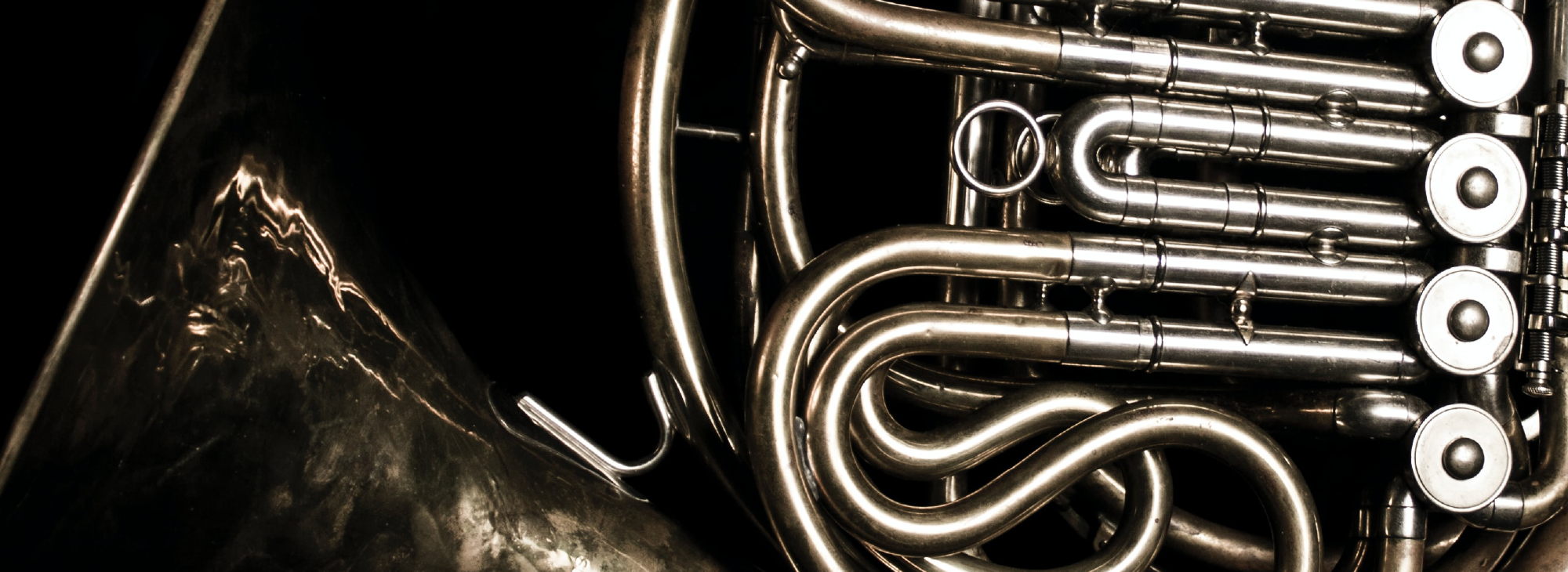
In the initial weeks of the shelter-in-place orders, I learned how to build a website from scratch. It was so fulfilling to help my private instructor for French Horn and broaden my programming skills. I have also started doing online workout sessions with my mom! It’s a great way to escape the usual routine and do something I hadn’t had time for during the school year.

I’ve started reading for fun again. In Daniel Coyle’s The Little Book of Talent, Coyle writes, “After all, you aren’t built to be transformed in a single day. You are built to improve little by little, connection by connection, rep by rep … Seek the small improvement one day at a time.” Advice like this is especially empowering right now while we are forced to face life day by day.

Picking up new hobbies and revisiting old ones has helped me find fulfillment. It is rewarding to see things like my horn playing improve. With this extra time, I have the freedom to challenge myself with new music and play personal favorites. Recently, I learned the guitar solo from Queen’s Killer Queen on horn, and a clip of it was featured on NPR’s It’s Been a Minute broadcast.

While it is weird not seeing my friends, the feeling of separation is especially difficult every time a birthday comes up. With orders against large gatherings, the quarantine has pushed us to get creative. In place of traditional birthday parties, my friends plan surprise drive-by celebrations. It’s great to see them again even from a distance.

Something else that has helped bridge the distance is technology. My normal school routine was turned upside down like everyone else. While at first it was difficult to get used to meeting on Zoom, I soon looked forward to seeing my teachers and friends online. Adapting to the new situation together was fun and brought us together as a school community. And soon, I will be attending a virtual “banquet” with the Leander High School IB Senior Class to look back on the past four years together with a slideshow and senior awards. I cannot wait!

Technology has also brought me a taste of my upcoming freshman year at Northwestern University. Over the past three weeks, I have been able to join their horn studio classes online. Though normally reserved for enrolled students on campus, incoming freshmen were surprised with a special invite from our soon-to-be professor. This has been an insightful, amazing experience! Principal horn instrumentalists from the Chicago Symphony and Cleveland Orchestras have even joined the calls to answer questions.

These artists and role models not only serve as an inspiration to students like me, they are also beacons of hope for their communities. One of the most powerful things I’ve witnessed during this time of crisis is the generosity of artists. While live concerts have been canceled, many professional musicians are choosing to hold concerts and interviews online – whatever it takes to make music and reach people who need music now more than ever.

There have been ups and downs over the past several months, but this time really allowed me to reflect on the things in my life that I am thankful for. With my 13 years in Leander ISD ending soon and a new chapter in my life beginning, I want to make sure I remember to give back. It may be “one day at a time” right now, but you can accomplish a lot for yourself and other people in only one day.